Go to the Shutterfly home page.

Photo Strip Christmas Cards

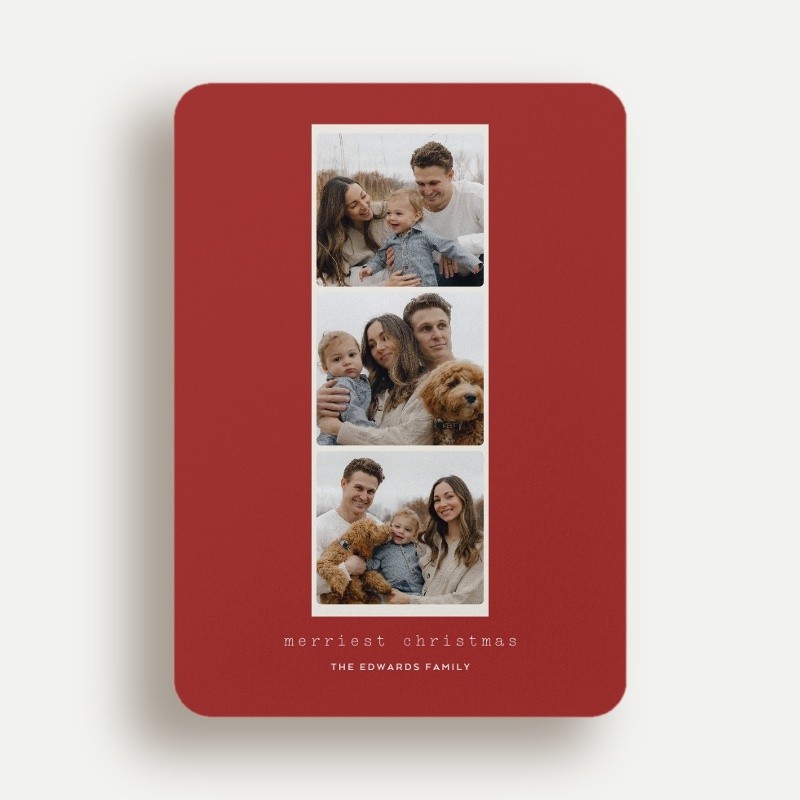
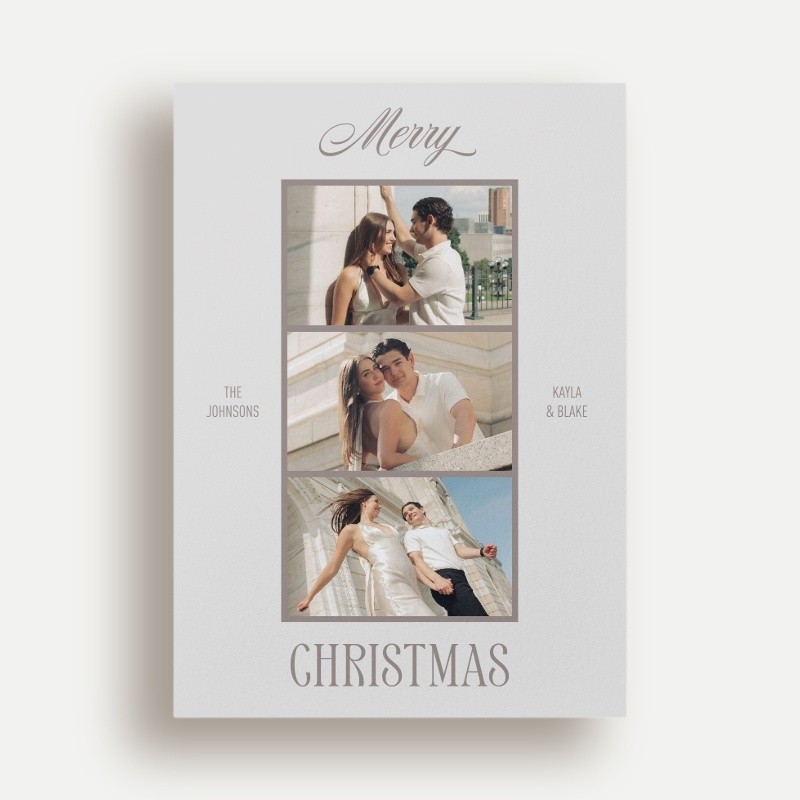
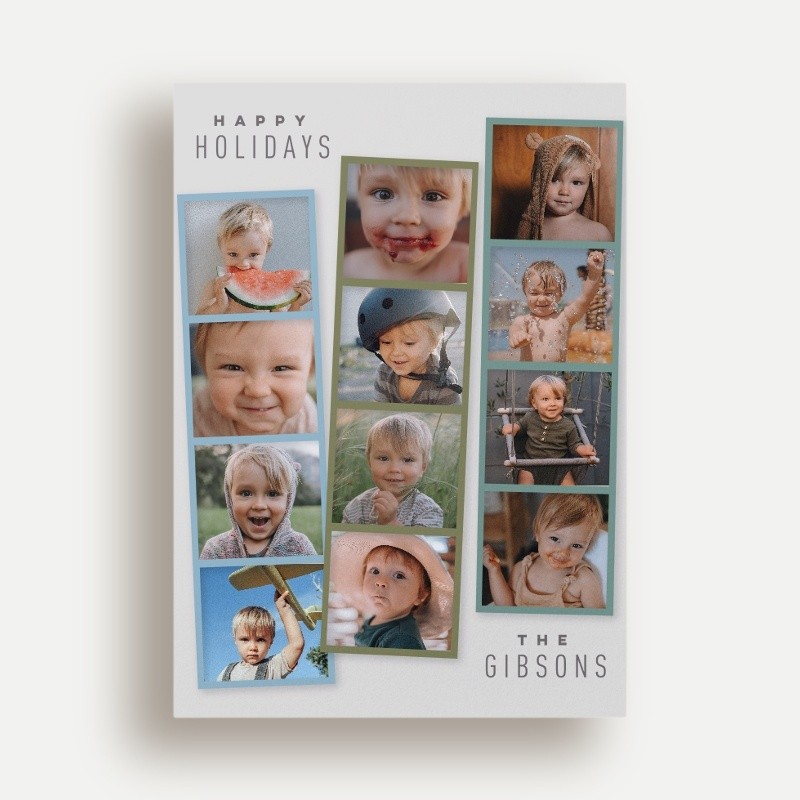
One favorite photo? Make it a whole strip of memories. Photo strip Christmas cards bring your sweetest smiles, candid moments, and year’s highlights together in a playful, photo-booth-inspired layout. Explore simple three-photo designs and filmstrip collages with room for more. Add your family name, choose a heartfelt greeting, and turn the moments you love into Christmas wishes worth keeping.

Photo Strip Christmas Cards

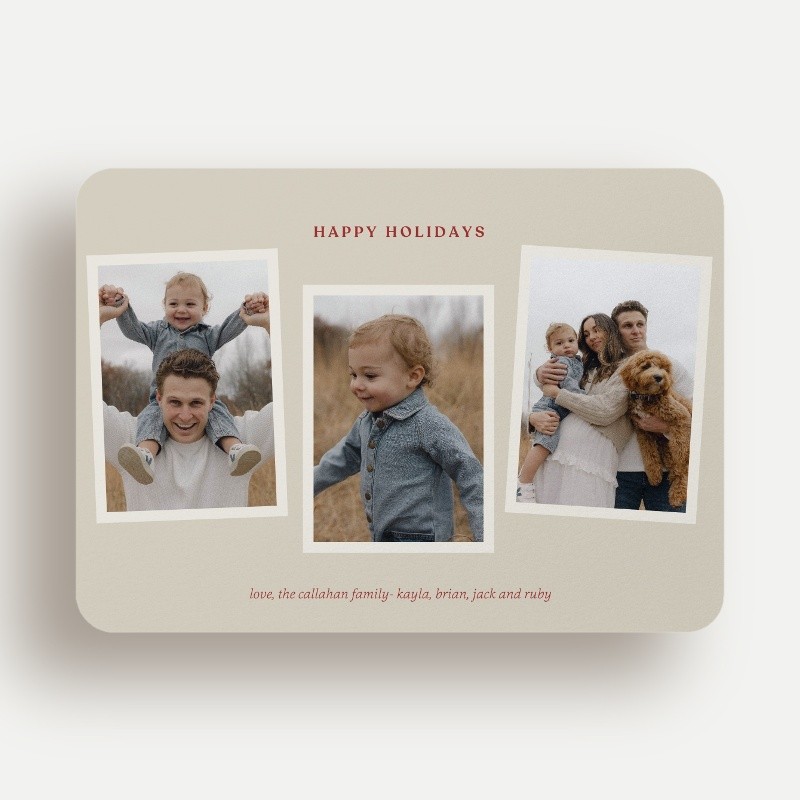
Photo strip Christmas cards are printed holiday greetings that arrange several pictures in a narrow row or column, much like the prints from a photo booth. The small frames read in sequence, so the pictures can tell a story that a single portrait might miss. A family portrait followed by the dog wandering into the frame and everyone breaking into laughter gives the card a little of the spirit of the day. The pictures don’t have to come from one sitting, either. A graduation photo, a snapshot from a weekend trip, and a picture taken at the kitchen table can share a strip when each frame has one clear subject. Some layouts make the strip the main feature, while others pair a full-size portrait with a run of smaller photos. A vertical strip suits close-ups taken with a phone held upright, while a horizontal row can carry a series of wider scenes. The shape of each opening matters as much as the direction of the strip: a close-up can fill a tall frame without losing much, but a wide group photo may lose the people at either end. In that case, the larger photo area is often a better home for the group shot. A strip with fewer, larger frames makes faces easier to see, especially in cards sent to relatives who might want a clear look at how much the kids have grown. A strip with more frames leaves room for quick expressions and small details, like flour on a cheek after an afternoon of making Christmas cookies. Pictures from different places can sit comfortably together when their brightness is similar. Black-and-white photos can also give snapshots taken under different lighting a consistent look and bring out the photo booth feel. Either way, a little space around each face keeps the sequence readable once the pictures are printed at card size.

The design around the photos can play up the photo booth look or make the card feel more like a traditional Christmas greeting. Thin borders between images give each frame a crisp edge, while a wider margin leaves room for a greeting that won’t compete with the pictures. A short “Merry Christmas” can sit above a tall strip or below a horizontal row, with names set apart so they’re easy to read. A quieter background helps when the pictures already have a lot going on, such as patterned pajamas, bright ornaments, or several people gathered around a dinner table. For a different take on the striped look, Striped Christmas Cards puts the emphasis on stripes in the artwork rather than on a sequence of photo frames. Paper and finish also affect how the pictures read. A matte surface cuts down on glare under a lamp and suits cards that will be propped up on a mantel or passed around after dinner. A finish with more sheen can make rich colors and dark backgrounds look more pronounced, though it will also reflect more light. Sturdier cardstock holds its shape better when a card is passed from hand to hand or tucked into a display. A flat card puts the full arrangement in view at once, while a folded card can offer more room for a longer greeting inside. For either format, the dimensions are worth a look before choosing a layout. A tall, narrow card emphasizes the classic strip shape, while a wider card gives group photos and longer family names more breathing room. The envelope should fit the finished card without forcing the corners against the edges. Square envelopes and especially thick mailings can have different postal requirements from standard rectangular letters, which is worth keeping in mind when a stack of cards is headed to the mailbox.

A photo strip Christmas card is a small way to share news without writing a full family letter. Parents can use the frames to show how a child has changed over the year, couples can pair a favorite portrait with the outtakes, and pet owners can turn a string of curious looks into a card that barely needs a caption. For grandparents or relatives who live far away, a date or a handwritten line on the back can give an ordinary snapshot a place in the family story. Close friends might enjoy the candid pictures most, while a card for neighbors or family acquaintances might lead with a clear portrait and keep the rest of the strip simple. Cards can also mark a first Christmas in a new home or introduce a new family member to people who haven’t met them yet. For someone who likes to save family photos, the card itself can serve as a small gift tucked into a package or slipped into a card display. If there’s room for a personal note, a pen suited to the paper finish helps keep the writing crisp. Ink can take longer to set on a coated surface, so letting the note dry before stacking or sealing the cards helps prevent smudges. At the other end of the mail, a favorite card will generally stay flatter in an album or a clean, dry drawer than on a crowded counter. Keeping it out of prolonged direct sunlight can help limit fading, and slipping it into an album rather than pinning it up preserves the edges. The appeal of the strip often lasts well beyond Christmas: a formal portrait shows who was there, but the frame beside it might show the look two siblings gave each other just before they both cracked up.

FAQ