




Your wedding album should tell the full story of your day—from the quiet moments getting ready to the celebration on the dance floor. Organizing your photos in a thoughtful order helps preserve those memories in a way that feels natural and meaningful every time you flip through the page
The Best Way to Organize a Wedding Album
The best way to organize a wedding album is to arrange photos in chronological order so the album tells the story of the day from beginning to end. Most wedding albums start with getting-ready moments, move through the ceremony and portraits, and finish with reception celebrations and the final send-off.
A typical wedding album order looks like this:
- Getting ready photos
- Wedding details (dress, rings, invitations, venue)
- First look or couple portraits
- Ceremony moments
- Family and wedding party portraits
- Cocktail hour or candid guest photos
- Reception highlights (entrance, dances, speeches)
- Cake cutting and dance floor moments
- The send-off or final nighttime portraits
Following this structure keeps the album easy to follow while preserving the natural flow of the day.
Start With the Beginning of the Day
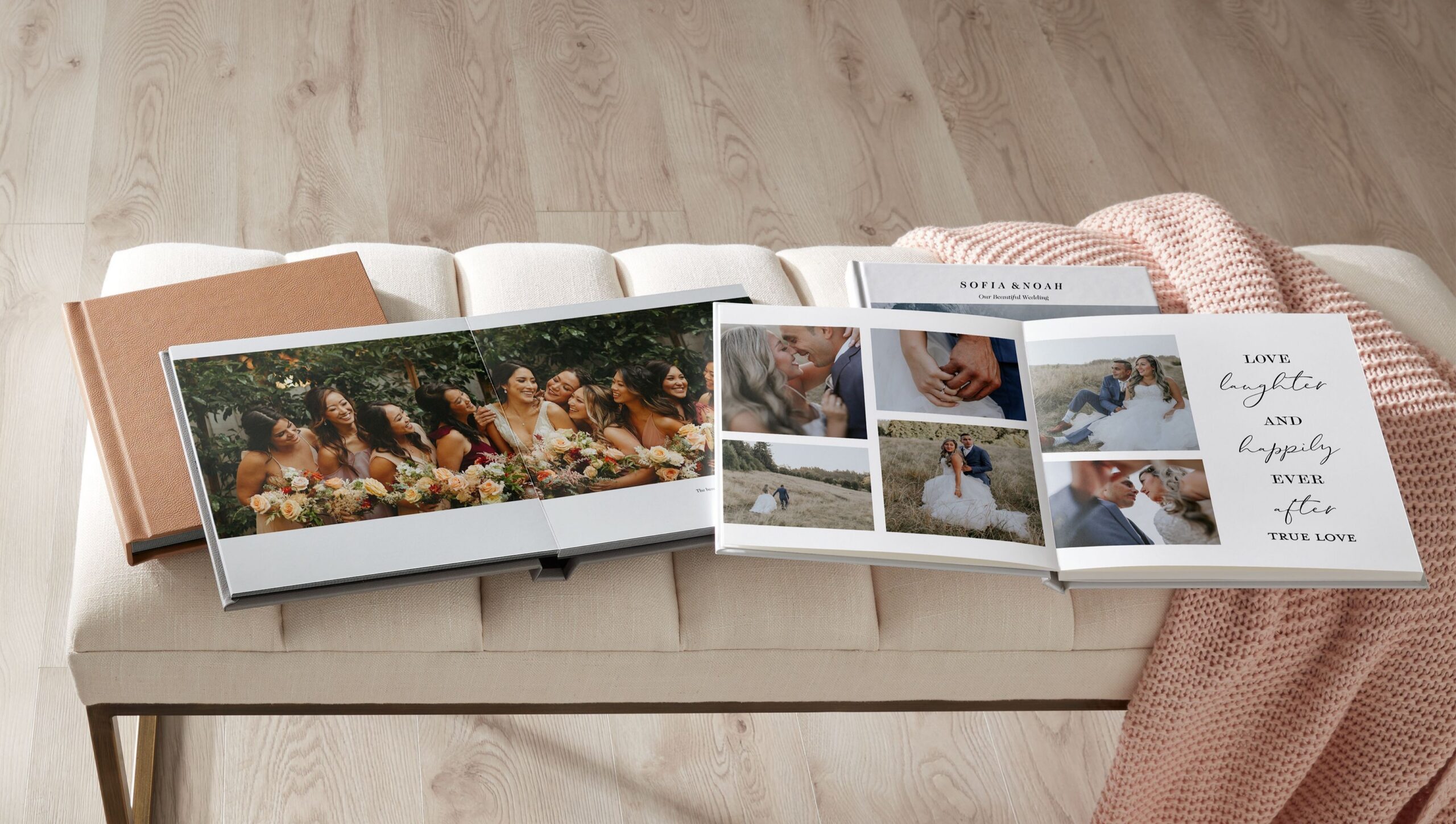
Most wedding albums begin with the quiet anticipation before the ceremony. Getting ready photos help set the scene and show the emotion leading up to the big moment.
You might include:
- The dress, shoes, rings, and other detail shots
- Hair and makeup moments
- Bridesmaids or groomsmen getting ready
- A first look between the couple
These early photos act as the introduction to your wedding story and create a natural starting point for the album.
Capture the Ceremony
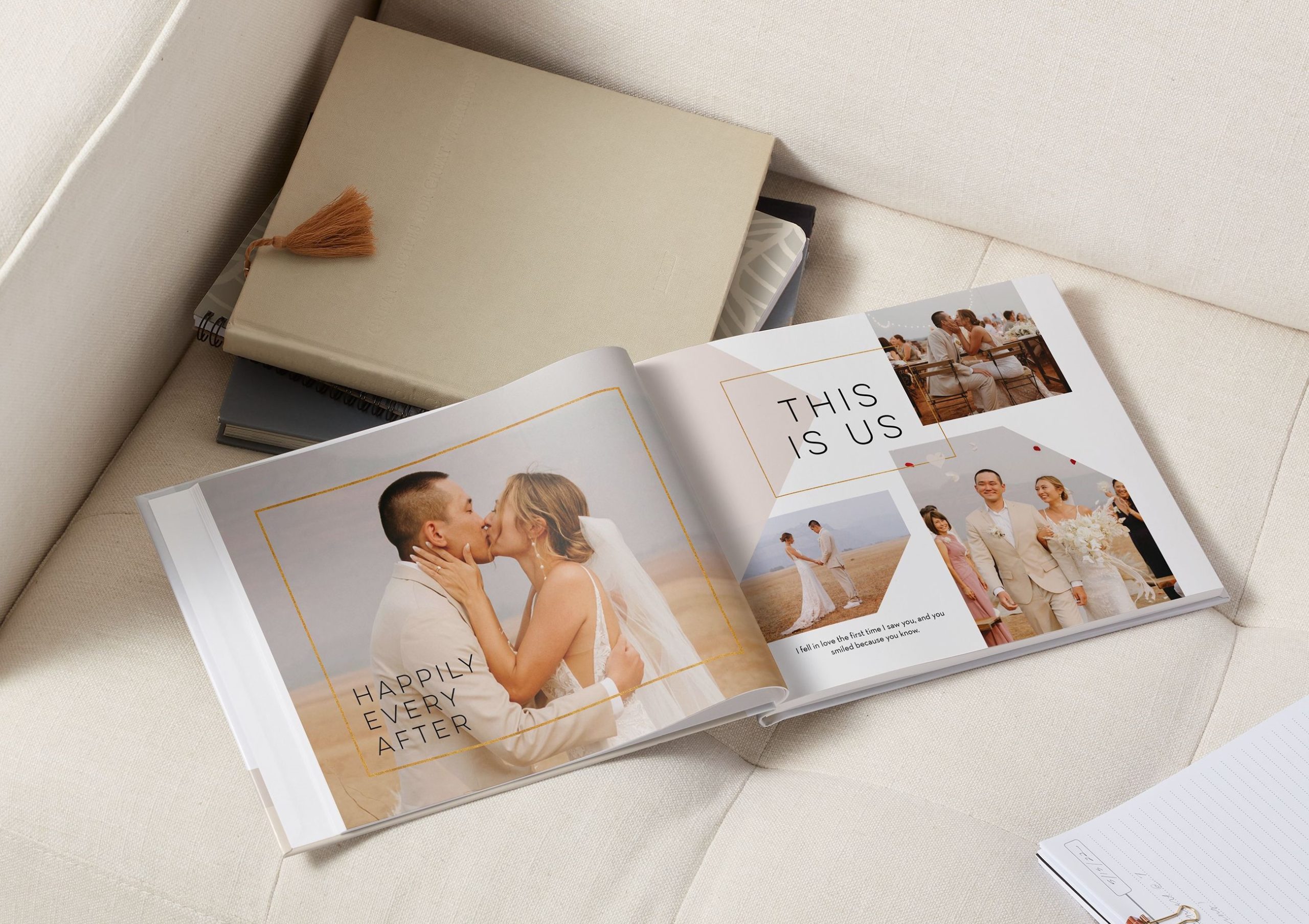
The ceremony is the emotional centerpiece of the day, so it usually appears early in the album after the getting-ready moments.
Focus on photos that show the progression of the ceremony, such as:
- Walking down the aisle
- The couple at the altar
- Ring exchange
- The first kiss
- Walking back down the aisle together
Using a mix of wide venue shots and close-ups helps recreate the atmosphere of the ceremony.
Include Family and Wedding Party Portraits
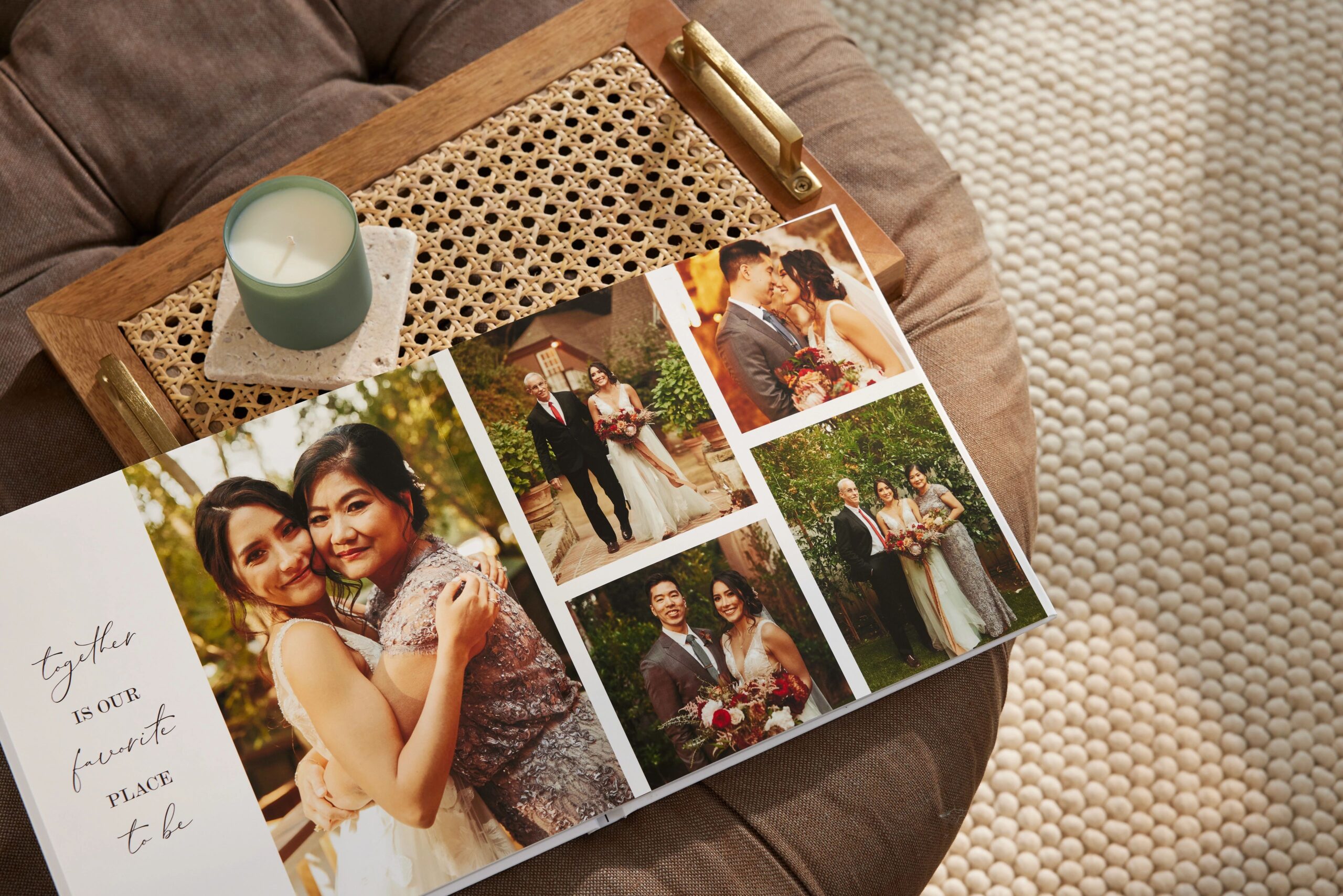
After the ceremony, most couples include their formal portraits. These photos provide structure in the album and highlight the people who were part of your celebration.
Popular choices include:
- Couple portraits
- Wedding party group photos
- Immediate family portraits
- Extended family photos
Rather than placing every portrait on separate pages, try grouping similar photos together so the album flows smoothly.
Highlight the Reception Moments

Reception photos bring energy and celebration into the album. These pages often include some of the most joyful and candid moments from the day.
Common reception highlights include:
- Grand entrance
- First dance
- Parent dances
- Toasts and speeches
- Cake cutting
You can dedicate a few pages to each moment or combine several events on one spread depending on how many photos you want to include.
Add Candid Moments and Guest Photos
Some of the most memorable images come from spontaneous moments. Candid photos help capture the personality of your wedding day and keep the album from feeling overly posed.
These might include:
- Guests laughing and celebrating
- Dance floor moments
- Friends hugging or chatting
- Quiet moments between the couple
These photos add warmth and authenticity to your wedding album story.
End With the Celebration and Send-Off
Many couples close their wedding album with the final celebration of the night. These photos create a satisfying ending to the story.
Common final images include:
- Sparkler send-offs
- Night portraits of the couple
- Guests cheering as the couple departs
- Final dance floor moments
Ending with these images brings the album full circle, showing the joy and excitement that wrapped up the day.
Example Wedding Album Page Layout
If you’re designing your album yourself, it can help to visualize how photos might be arranged across pages. A typical wedding album often includes 20 to 40 pages, with each section focusing on a different part of the day.
Here is an example layout many couples use:
Pages 1–2: Opening Spread
A full-page photo of the couple or venue to introduce the album.
Pages 3–6: Getting Ready
Hair and makeup, getting dressed, bridesmaids or groomsmen helping, and detail photos of accessories.
Pages 7–8: First Look or Couple Portraits
Romantic portraits before the ceremony or quiet moments together.
Pages 9–12: Ceremony
Walking down the aisle, vows, ring exchange, first kiss, and walking back down the aisle.
Pages 13–16: Family & Wedding Party Portraits
Group photos with family, bridal party, and important guests.
Pages 17–20: Reception Highlights
Grand entrance, first dance, parent dances, and speeches.
Pages 21–24: Celebration & Dance Floor
Guests dancing, candid moments, and joyful group photos.
Pages 25–26: Cake Cutting or Late-Night Moments
Small reception details and fun guest interactions.
Pages 27–28: Send-Off or Night Portraits
Sparkler exits, nighttime couple portraits, or the final goodbye.
This type of structure keeps the album balanced while making sure the most meaningful moments of the day are highlighted.
How Many Photos Should Be in a Wedding Album?
Most wedding albums include 60 to 120 photos, depending on the size of the album and how many pages you choose. A 20–40 page wedding album usually features a mix of full-page photos and smaller groupings of images that highlight different moments from the day.
Rather than including every photo, the goal is to select the images that best tell the story of your wedding. This typically includes key events like getting ready, the ceremony, portraits with family and the wedding party, and major reception moments.
A good rule of thumb is to include:
- 1–3 photos per page for dramatic full-spread images
- 3–5 photos per page for collage-style layouts
- A mix of portraits, candid moments, and detail shots
Keeping the album focused helps the most meaningful photos stand out while maintaining a clean, polished design.
Tips for Choosing Photos for Your Wedding Album
When narrowing down your photos, start by selecting the moments that mattered most during the day. These might include emotional exchanges, favorite portraits, or small details you want to remember years from now.
Many couples find it helpful to:
- Choose one standout photo from each major moment
- Add a few candid or guest photos that capture the atmosphere
- Include detail shots like rings, florals, or décor to round out the story
By focusing on the highlights rather than every single photo, your wedding album will feel intentional, balanced, and easy to enjoy from beginning to end.
Tips for Designing a Beautiful Wedding Album
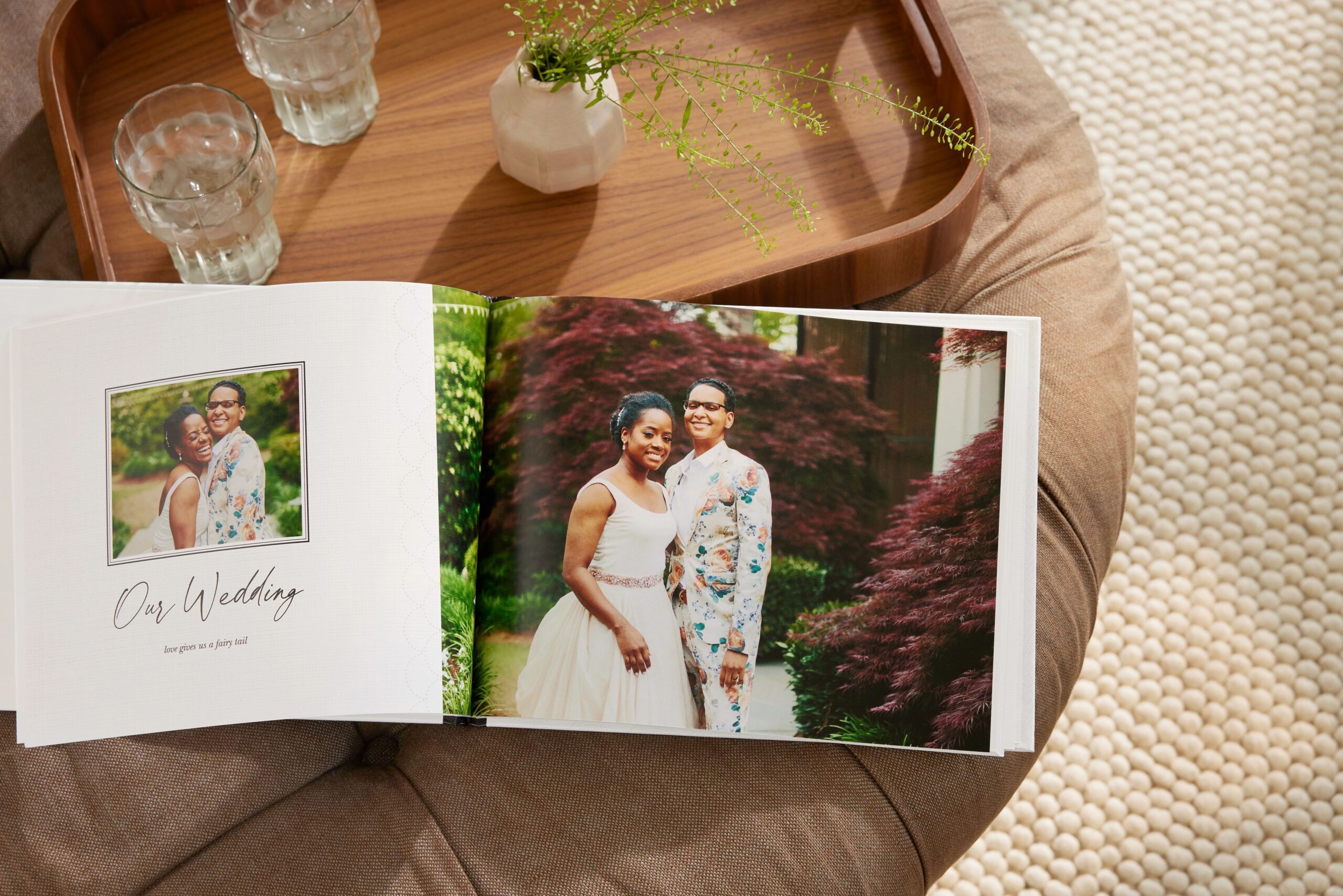
Once your photos are organized, a few design choices can make your album feel polished and easy to enjoy.
Keep pages simple.
Avoid overcrowding pages with too many photos. Giving images space allows the most important moments to stand out.
Use one standout image per spread.
Feature a large photo on each spread to anchor the layout and create visual impact.
Mix full-page photos with smaller collages.
A balance of layouts keeps the album interesting while still feeling cohesive.
Let the story flow naturally.
Think of the album like a timeline of your wedding day so the story unfolds smoothly from start to finish.
Preserve Your Wedding Story in a Custom Photo Book
Your wedding photos deserve more than a folder on your phone. A custom wedding photo album brings your memories together in one place, making it easy to revisit the moments that made your day unforgettable.
With customizable layouts, premium paper options, and beautifully printed pages, a personalized wedding album helps turn your favorite photos into a lasting keepsake you can share for years to come.
Additional Resources:
